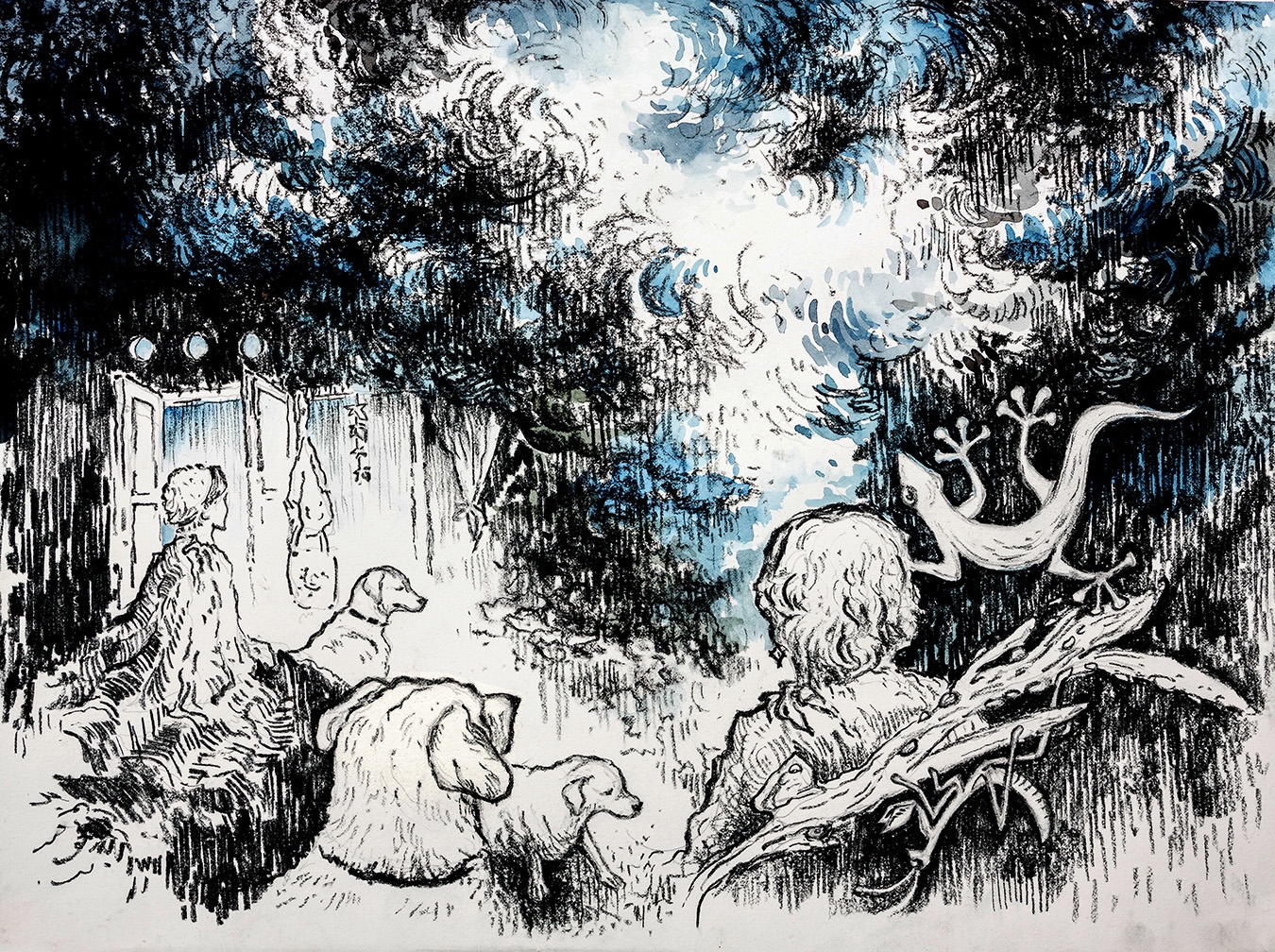
ILLUSTRATIONS BYAthulya Pillai
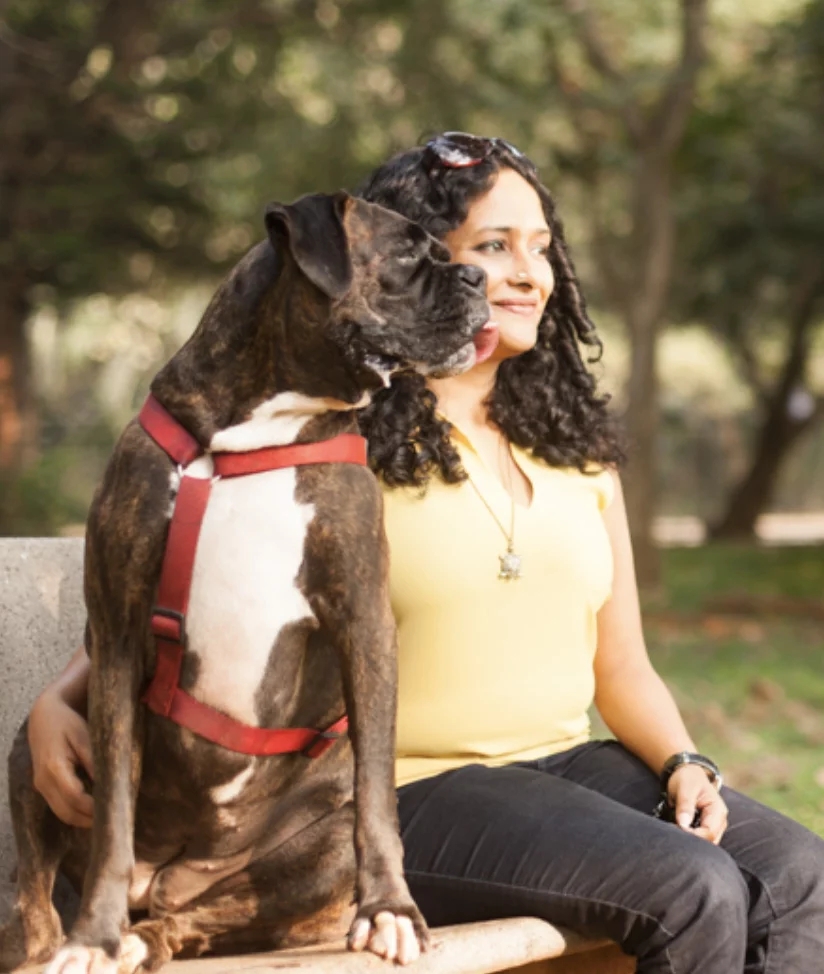
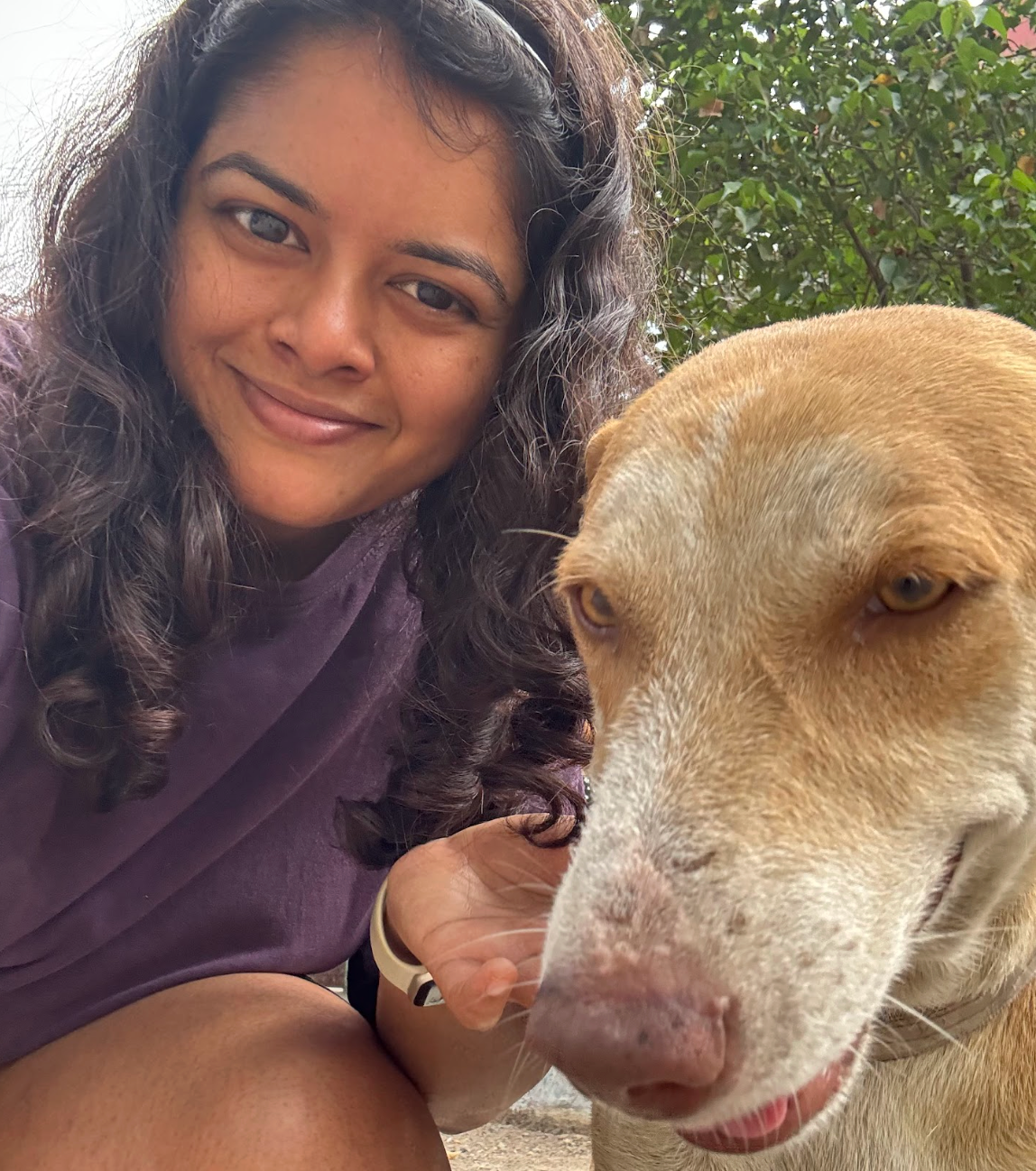
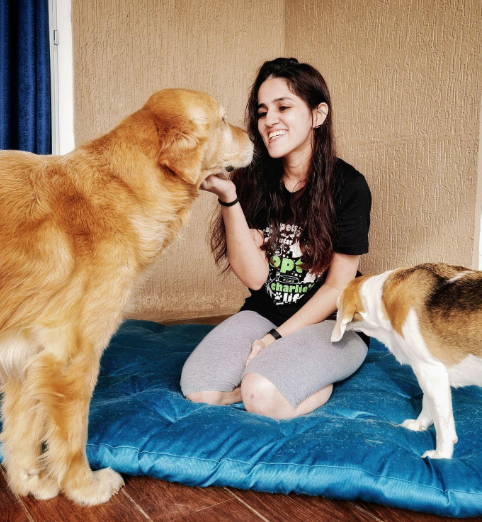
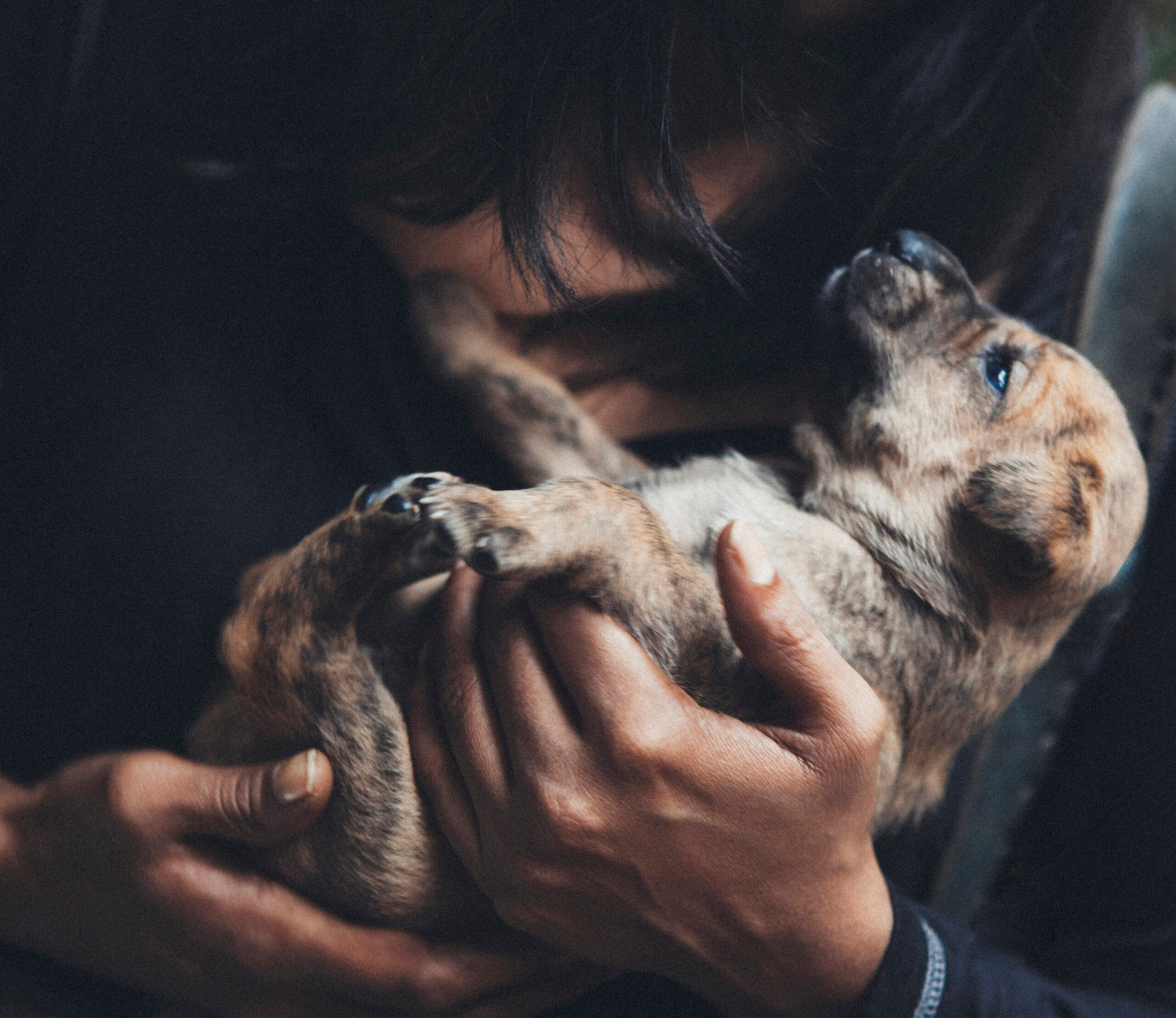
Streeties are India’s free-living dogs — beloved presences of the street, the lane, the market, the neighbourhood and the community, often known, fed and cared for by many rather than owned by one. They are part of the everyday fabric of Indian life, forming attachments to people, places and other animals around them.
Through five such lives, we look at home beyond walls and ownership: as territory, familiarity, friendship, safety, freedom and the shared worlds humans and other animals inhabit.
A Shadow for Christmas
by Ahana Rangachari
by Ahana Rangachari
Black Shadow was a small and unassuming puppy named for her fur, which blended into the shadows as she moved quietly in the dark parking lot of my building. The parking lot was off-limits to street dogs, but Shadow paid little attention to human constructs like residential society rules and private property.

It didn’t matter to her that the residents’ WhatsApp group was rife with complaints about her, complete with adorable pictures of her peeking out from between cars. It didn’t matter that the guards constantly chased after her with their stout sticks to drive her away. To her, this was home.
She moved in as the winter set in, probably because the stuffy parking was a lot cosier than the little park she had been living in. I would catch glimpses of her at night when taking my dog, Loki, for a walk. Little flashes of black darting between pillars as she tailed Loki and me from a safe distance. I would reach out to her, but Loki’s disapproving glare would send her scampering.
One day, someone discarded an old sofa in that half-hearted way one does, and so it ended up sitting in their parking space. Jackpot! Shadow immediately claimed it as her throne. Whenever I passed by, I would find her sprawled out on it, snoozing. The couch was tucked away in a corner, so she could nap in peace with her little white-tipped paws dangling over the edge. I was always careful not to linger too long near her or stop to take pictures because I didn’t want to alert anyone to her presence.
As Christmas approached, I considered if it was time to get her spayed. But I told myself it was better to wait till she was a little older and more familiar with me. Of course, Shadow told me exactly what she thought of my best-laid plans by getting pregnant.
As she continued to cozy up on her little sofa bed while her tummy grew, I spent sleepless nights wondering what would happen if she were to give birth on the sofa. Thoughts of little puppies being bundled up in a carton and tossed in the garbage outside haunted me. Surely people wouldn’t be so cruel, would they? Given the multiple complaints about Shadow, the residential society’s maintenance team tossed out her sofa. I saw it lying crooked on the side of the street, waiting to be collected by the garbage truck. Shadow would have to find another place to sleep now.
This is how I found her on Christmas Eve. Most of the parking lot was dark except for a small decorated space. A garishly lit Christmas tree and a nativity scene set up on a little white carpet. Curled up on the carpet was a pregnant Shadow. Here, on this cold Christmas Eve, life was imitating art. An expectant mother was seeking refuge against the elements. There was something so hauntingly beautiful about her sleeping peacefully under the tree like a present. We didn’t know when the guards would chase her out, where and how she would give birth to her pups, or if she would lose them to the vagaries of the world…
But for now, Shadow was at home in her manger.
Before I Called It Mine
by Sindoor Pangal
Chaita showed up in my life about five years ago, when I bought a piece of land seemingly in the middle of nowhere, with the intent of using solitude to deal with the grief of losing my husband. At the time, I had no idea what I wanted to do with the land, and so would just visit a few times a month, stare at it and wait for inspiration. Inspiration did show up eventually, but well before that, a scrawny dog started to appear. I named her Chaita.

I wondered how this dog knew I was visiting. But there she was, wagging her tail so hard that it shook her skinny, weak body. She had a massive, wide scar on her back that suggested some early trauma. But neither that nor her apparent hunger seemed to dampen her spirit. She looked at me with sparkling eyes and ears pulled to the side, in what I now call her “I love you” look.
This scrawny dog moved me. While I fed her on my sporadic visits, I could see she needed more food. Eventually, I rented a house near the land so I could feed her regularly.
By this time, the inspiration that had arrived with Chaita had taken the form of a vision for a cement-free, vernacular, sustainable home. The construction commenced. One morning, Chaita showed up with her daughters! I named them Iti and Yaya. They bounded up to me and played with me, as if they had known me all along. Perhaps Chaita had a way of familiarising them with me.
A few days later, a male dog, seemingly Chaita’s mate and the puppies’ dad, showed up. I named him Dude. And thus, Chaita’s entire family had now moved into my property.
I often tell my students that the moral of this story is that we should always ‘show up’. We never know when we may run into someone who may change our fate. Chaita went from being a scrawny, scarred dog to being a well-fed golden dog with a sofa to rest on, more than she can eat, and her entire family provided for. What a deal this girl negotiated — she got me to rent a nearby home and then open up my newly constructed home, not just to her, but to her entire family.
However, I wonder whether this version of the story is the real one or my anthropocentric version.
It’s been five years since our story began, and I now know more about them. Chaita and her family did not ‘move in’ or ‘appear’ when I showed up. They have always been around. They camouflage really well into the red-brown soil of this land. When they sit in the brush, I can’t spot them. They watched me from their vantage point and chose to be seen when they felt it was safe.
So it’s not accurate to say that Chaita and her family showed up when I visited. The more accurate way of saying it is that I moved into their home, which scared them to the point of hiding in the bushes, and that once they assessed me as not a threat, they started to show themselves to me.
This makes me think of all the times they watched me, and it pleases me to realise they judged me as ‘good’. However, it also sparks another line of thinking. Did they move into my property, or did I move into theirs and, in true human fashion, claim rights over their home using a legal system that only permits me, the human, to do so?
People often express pity at the homelessness of free-living dogs of India. But I do wonder. Were Chaita and her family homeless before I moved in? What about the peacocks, snakes, hares and lizards who lived on the land before I moved in? Are they homeless too, or did my move snatch their home from them, thus rendering them homeless? Does one need cement and steel to create a home?
Ironically, the home I have built is cement-free. According to Indian law, it is not a "pukka" house but a "katchcha" house. But to me, my home is the best home there is, full of animals, love and laughter. It is one that has helped me pull myself out of the abyss my widowhood sent me into. It is no less of a home than the one you, dear reader, live in.
I’d argue that if the hares and peacocks could tell their story, they’d say the same to me. They’d say that their ‘home’ is no less than mine.
What about the dogs? Well, they do seem glad to be sharing this space with me, but they refuse to become my "pets." Chaita is the queen of this land and commands an army of three. She has a rich social life. She takes off each day to meet her friends and foes, have arguments, nurture her friendships and settle old scores. Her daughters and mate show up for her social drama.
My house is but a pitstop for them. Regardless of how much opulence I fill it with, they do not seem to consider it their "home." This land is their home, not the structure. It distresses them to get trapped within structures like mine. Their ‘home’ also includes their freedom, their neighbours, their social fabric and their lives, including all the drama that goes into the social lives of dogs.
Dogs and humans share a history tens, if not hundreds, of years old. It is not a story of domination and domestication. It is a story of co-habitation and co-evolution. Paxton argues that this co-evolution is what makes us human and makes them dogs. So, perhaps, the entanglement of my life with that of Chaita and her family is indeed what makes us both live and thrive.
I recognise that I can use my human privilege to completely colonise this land I am on, insisting that this land and every creature on it is now owned by me and is to behave the way I want it to. But in attempting not to do that, my idea of a home has shifted.
A home is more than a structure. It is about connections that can be created, the community that can be fostered and the safety that can be provided for those we love. It is a place of nurture and healing, about sacred silence and laughter, about interconnectedness.
This home that I am in, built of the soil from this land, surrounded by fruit- and vegetable-bearing plants nurtured from this land, in the company of the creatures of this land, is where I feel reborn. Just building this structure is not what my soul needed to deal with this grief. I needed to really explore what a "home" should be.
A home can exist even without a structure. A home is more than that.
A home can exist even without a structure. A home is more than that.
Chaita and her family taught me that.
Sheru: The Wild Guardian
by Surabhi Venkatesh
Sheru: The Wild Guardian
by Surabhi Venkatesh
This story is about a dog who goes by many names, but I will call him Sheru—because the first time I saw him, three years ago, he looked strikingly like a lion, with his rich golden mane framing his face.

It didn’t take too long to figure out that there was something special about Sheru. He had won over Sharmili, a lone older dog who hated every other dog and just about tolerated human proximity. They would roam the streets and were seen together all the time. Soon enough, Sharmili's many homes became Sheru’s homes too: open construction plots in the daytime to bask under the sun; huge piles of dry leaves in a nearby dump for warmth from the biting winter cold, where both dogs would be completely camouflaged; makeshift beds that kind residents put together; and eventually, a semi-permanent version of a home in the verandah of a resident’s house.
I would watch them together and wonder—if Sheru could win over a dog like Sharmili, clearly there was something special about him.
Today, Sheru lives in many homes and has taken on the mantle of protector of the land he lives on.
When his friends bark, perhaps because of a stranger’s presence, he comes running out of one of his many homes to ensure everyone is safe. He takes his role as protector quite seriously. He intervenes whenever one dog is bothering another. Sheru breaks up rough play between rambunctious dogs who share the land with him, as if to remind them that there is no play without safety.
Sometimes he accompanies my dogs on walks and inspects the land, almost as if to check that everything is in its right place. Together, the dogs sniff out tiny crevices, different textures and scents, having entire conversations with each other that I could never truly be a part of, given my limited human perception.
Sheru is also remarkably gracious. When new and vulnerable dogs step onto his land, he makes them feel at ease. He lets the other dogs know that this is home to their new friends too, even if only for a short while.
Sheru is the only street dog here who has a collar around his neck. It in no way means he is “owned.” He is still wild and untamed. But the collar feels to me like a symbol of the sense of belonging he carries as he roams freely.
Sheru continues to walk this land, his mane framing his face, his coat warmed by the sun—a reminder that the truest guardians of home are the ones who never try to own it.
What Is Home for a Streetie?
by Juhi Patel
by Juhi Patel
Let me tell you about Tiger, affectionately known by his guardian as Floppy and by the community as Coco. He is a gentle giant with a soft heart. He earned the nickname “Floppy” because one of his ears perks up while the other always droops. He has an extraordinary ability to connect with people; you would only believe it if you saw it for yourself.

Now around seven years old, he has droopy eyes and a unique gait that gives him a bit of a reggae vibe—unhurried, relaxed and effortlessly cool. He is inseparable from Jinke, who never leaves his side. I’m not sure, though, how he feels about that.
Every morning when I wake up, I hear Tiger chatting with his morning friend—a lady who walks through our neighbourhood on her way to work, always carrying a few biscuits for him.
When I first thought about the concept of “home,” I imagined a defined space with walls, windows and boundaries. As an architect, I had been conditioned to think of home in that way. However, when I began to consider what home means to Tiger, my perspective changed. His home is organic, ever-changing, and cannot be confined within human ideas of structure or ownership.
For Tiger, home is defined by moments and experiences.
Home is his family and friends.
Home is lying in the sun on a warm day, entirely unbothered by the world rushing past.
Home is being shadowed by Jinke everywhere, whether he likes it or not.
Home is the steps of the local shop, where he playfully bullies passersby into buying him biscuits.
On Tuesdays and Thursdays, home is the basketball court down the road where the vegetable vendor sets up his cart.
Home is running to the open sewage drain in the evenings during summer to cool off.
Home is being curious about every new event or activity in the community and wanting to be included in everything.
Home is chatting with a friend in the morning.
Home is being hugged by his human neighbour, who doesn’t care if she appears clingy.
I am teary-eyed as I write this because Tiger is not home at the moment.
Diwali arrived with thunderous intensity, and it has been 11 days since Jinke began howling for her soulmate. It is heartbreaking to witness her in such distress. I have never seen grief as profound in a dog; it truly pierces the soul.
Tiger is away from home. Is he okay? Is he scared? Is he hurt? Will he find his way back to us? These questions endlessly swirl in my mind. Perhaps he will find a new sense of home, one that I may never get to witness.
Tiger is away from home. Is he okay? Is he scared? Is he hurt? Will he find his way back to us? These questions endlessly swirl in my mind. Perhaps he will find a new sense of home, one that I may never get to witness.
Until then, each morning, my ears awaken with the hope of hearing Tiger’s voice again, chatting with his friend as the world quietly begins its day.
Sundari: Citizen of a Revived Lake
by Sowjanya Vijayanagar
To truly understand what home means to a street dog, one must walk the wide, reddish-brown path snaking past Sarakki Lake on a cool Bangalore morning and observe a street dog named Sundari. Home for her is not an immovable shelter, but a shared, dynamic urban ecosystem built through resilience and collective perseverance.

This ecosystem is the revived Sarakki Lake. Its original name, Saavira hakki kere, means the lake of a thousand birds, and it was once a shrinking, sewage-choked body of water. Its existence today speaks to the human citizens who fought to restore it and to the possibility of coexistence. The return of the birds, the fish, and the echoing calls of the peafowl show that this urban space we call home is also a home for other-than-human citizens. Sundari is one of them.
She and her friends hold court along a specific stretch of the path around the lake, sharing the wide track peacefully with walkers and joggers. She knows the pulse of this place and its inhabitants. The environment bursts with life, yet the various species coexist harmoniously. Ducks glide across the water, parrots dart through the air, and fish swim in the depths of the lake.
Here, in this paradise regained, Sundari sprawls on the cool soil and, at other times, plunges into the water for a swim. When she is not napping, she is often spotted standing by the chain-link fence that serves as her window to the outside world.
I named her Sundari, meaning “the beautiful one,” inspired by the depth in her soul-stirring eyes. Every time we pass by her, she trots over for a non-negotiable petting session. She’ll lean into the fence, or turn her back toward us, and then, after a few strokes, she falls into a full, belly-up roll right on the open path, wiggling with delight. She exposes her most vulnerable spot on the busiest stretch of her world. It is the ultimate expression of trust: she knows she is absolutely, perfectly safe in her home.
Home for Sundari is her one friend, another dog who has been with her ever since I first spotted her, the water she swims in, the grass she rolls in and the warm, red earth beneath her paws. It is a sanctuary of simple pleasures.
It is the place where she can be entirely, beautifully herself, and a powerful, living reminder that we are all, human and non-human beings, citizens of the same land.