WORDS BYRadhika Iyengar
I’ve tried to make Bombay my home for the past three years, and each day feels like a quiet resistance – a refusal to anchor myself fully in the city. A large part of me clings to my childhood home in Delhi, where I once skipped along its corridors and watched my Golden Retriever chase balls. At the time, I never understood how deeply that house had rooted itself in me.
Now, each visit to Delhi offers a new lens. I notice the hairline cracks tracing the walls – markings of the 1997 earthquake that shook the capital, and my home. Or, the wooden cabinets lined with vintage books that once belonged to my grandparents. Or, the smell of steaming hot idlis drifting through the kitchen, while the hum of chopped coconut whirring in the mixie as my mother prepared chutney early morning. I had never paid attention to or appreciated the nuances of the walls and their idiosyncrasies, or the lingering smell that filled my home, until now – when I was miles away from the very home that had brought me up.
Distance has sharpened my memory. It has made me realise that home is not only a place of comfort, but a repository of time: small, persistent details that silently share the passage of years with you. Each time I return to my parents’ home, it feels like crossing the threshold into another time. The veins on my mother’s delicate hands rise more defiantly than they did the last time. My golden retriever’s pace has softened; my father's gait has grown unsteady, and my brother’s beard, once raven-dark, has begun to gather threads of white.
Now, each visit to Delhi offers a new lens. I notice the hairline cracks tracing the walls – markings of the 1997 earthquake that shook the capital, and my home. Or, the wooden cabinets lined with vintage books that once belonged to my grandparents. Or, the smell of steaming hot idlis drifting through the kitchen, while the hum of chopped coconut whirring in the mixie as my mother prepared chutney early morning. I had never paid attention to or appreciated the nuances of the walls and their idiosyncrasies, or the lingering smell that filled my home, until now – when I was miles away from the very home that had brought me up.
Distance has sharpened my memory. It has made me realise that home is not only a place of comfort, but a repository of time: small, persistent details that silently share the passage of years with you. Each time I return to my parents’ home, it feels like crossing the threshold into another time. The veins on my mother’s delicate hands rise more defiantly than they did the last time. My golden retriever’s pace has softened; my father's gait has grown unsteady, and my brother’s beard, once raven-dark, has begun to gather threads of white.
***
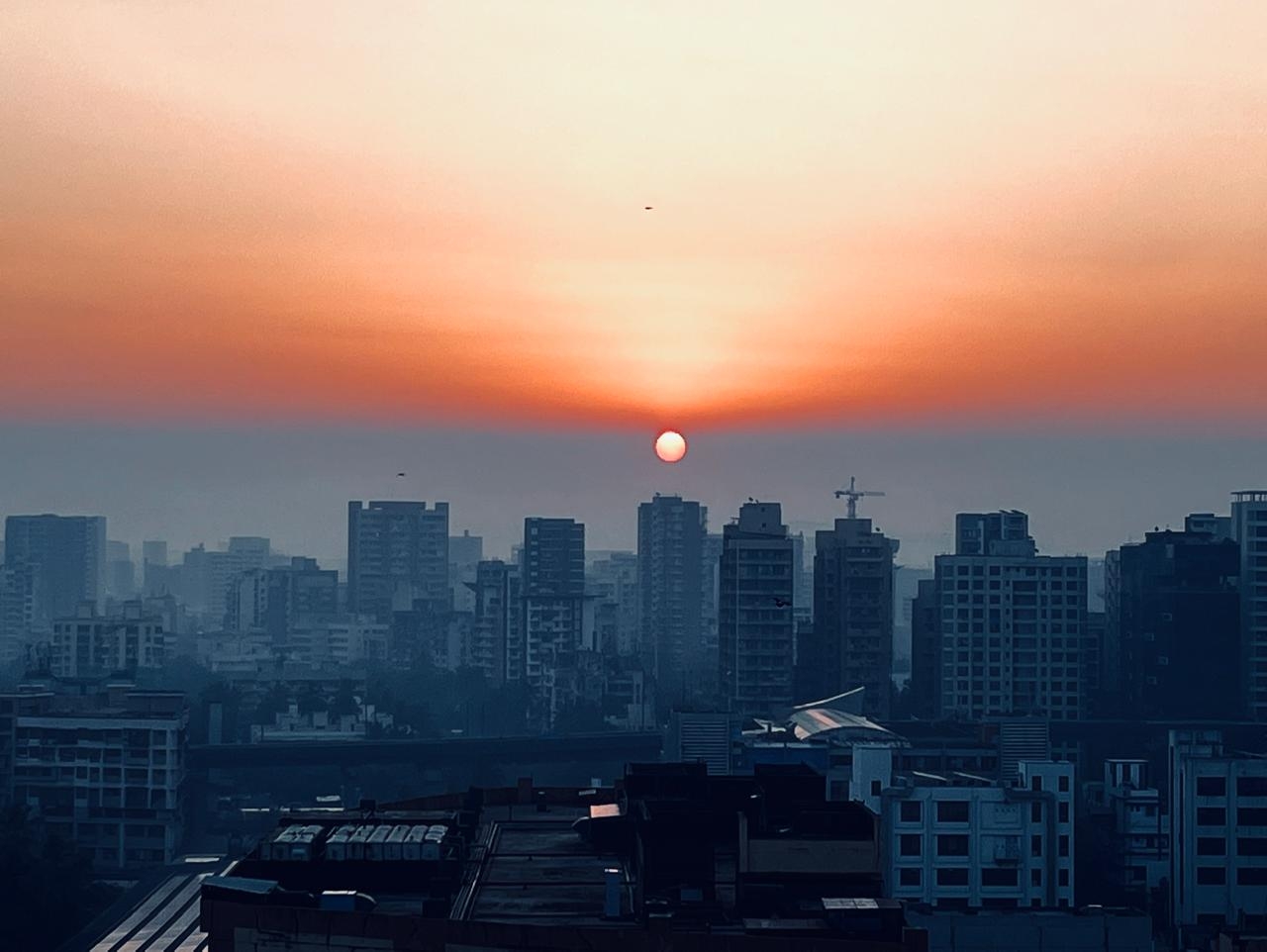
Bombay, by contrast, offers chapters rather than roots. In the three years that I’ve lived here, I have moved twice. One of these homes is where I was married – a warm, compact space that was small in a way that felt protective, rather than confining. It was in this smallness that I tried to take up space and find self-expression.
My husband had already dressed its walls and floors before I married him. I realised that objects, paintings and tiny trinkets that reflected my spirit had little room in the little home. My possessions took up space, or at least they tried to – as a way to make their presence known – but soon, they began stacking up, one above another, desperately swallowing corners, searching for somewhere to belong, piling up incongruously like a broken Tetris. They stuck out as misfits, refusing to shrink, yet increasingly gathering dust, becoming difficult to look at. I began turning away, assuring them that when we’d move again, into a larger home, they will be reinstated. But things that are neglected tend to wither without touch or a tender lingering.
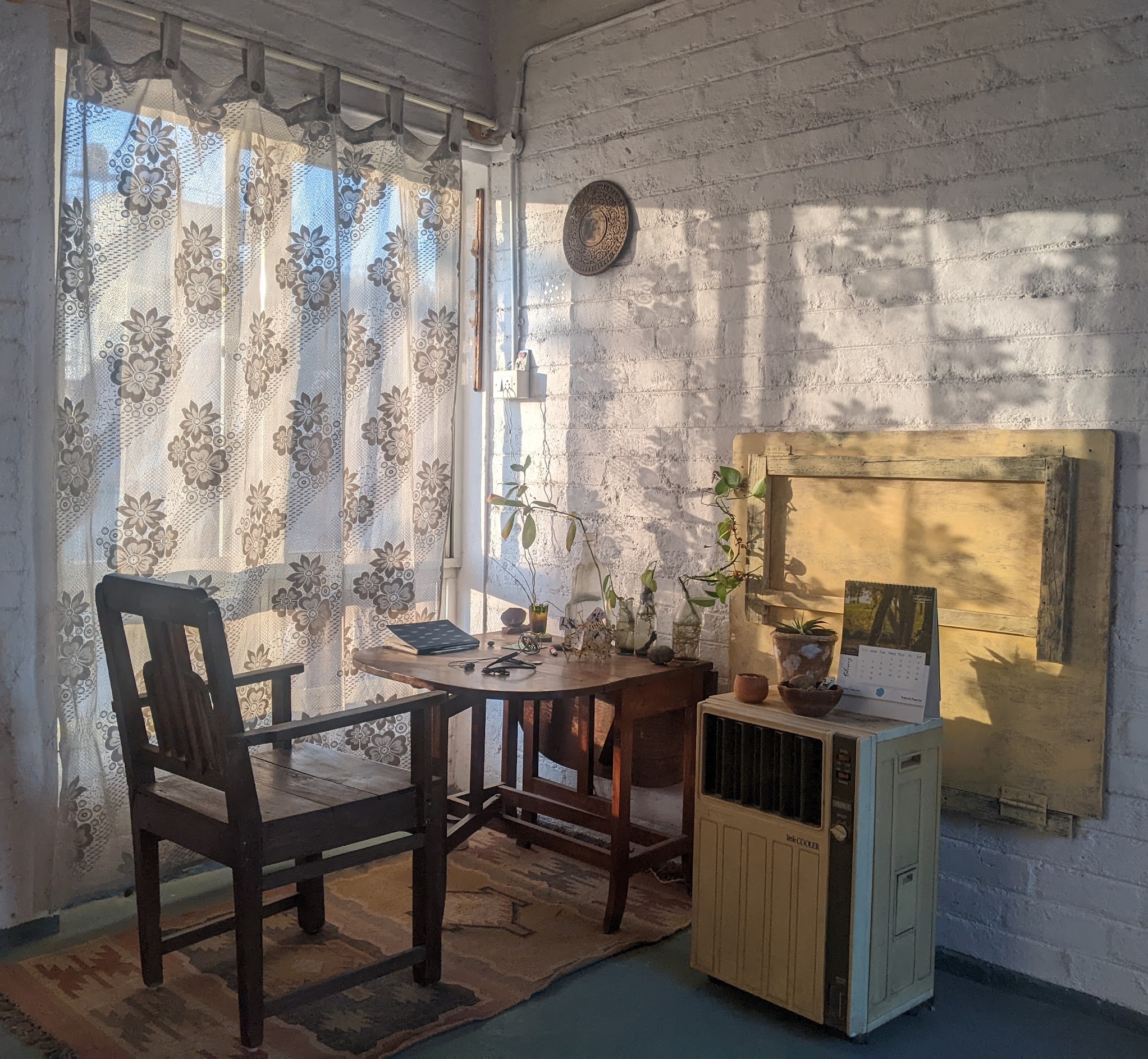
Back then, I was trying to finish the manuscript of my first book. The afternoons – long stretches of golden light breaking against the sharp corners of the ceiling – were companions to my solitary writing rituals. I wrote in the living room, alone, at the same table where my husband and I would later eat dinner together once he’d return from work. We would break open takeout boxes and wolf down steaming dumplings slicked with chilli sauce. Sometimes, we’d grill chicken together, earnestly marinated by our cook a few hours earlier.
My husband had already dressed its walls and floors before I married him. I realised that objects, paintings and tiny trinkets that reflected my spirit had little room in the little home. My possessions took up space, or at least they tried to – as a way to make their presence known – but soon, they began stacking up, one above another, desperately swallowing corners, searching for somewhere to belong, piling up incongruously like a broken Tetris. They stuck out as misfits, refusing to shrink, yet increasingly gathering dust, becoming difficult to look at. I began turning away, assuring them that when we’d move again, into a larger home, they will be reinstated. But things that are neglected tend to wither without touch or a tender lingering.
Back then, I was trying to finish the manuscript of my first book. The afternoons – long stretches of golden light breaking against the sharp corners of the ceiling – were companions to my solitary writing rituals. I wrote in the living room, alone, at the same table where my husband and I would later eat dinner together once he’d return from work. We would break open takeout boxes and wolf down steaming dumplings slicked with chilli sauce. Sometimes, we’d grill chicken together, earnestly marinated by our cook a few hours earlier.

If novels were to be believed, it was in the afternoons that I had a room of my own or a living room of my own – where I could unhook my bra, relish a cup of coffee, transcribe interviews, write the book, read a research paper – all while wrapped in a blanket of quiet that was occasionally punctuated by birdsong. Sometimes, I would watch sunlight move across the floor and notice tiny scratches etched into the walls, imagining the stories they held. Perhaps they were marks left behind by a previous tenant while taking out furniture; perhaps they were roadmaps for forlorn ants to find their lovers.
But the quiet I imagined cherishing soon became a gnawing silence. The absence of conversations, the scuttle of another person moving through rooms. It felt as though I was living with an absent roommate who paid rent. During those bleak mornings and afternoons, silence arrived carrying loneliness in its arms. Along shimmied in the practical weight of handling the plumber, the cook, ordering groceries, managing the press-walla and water shortages. The walls felt too close, ready to swallow me whole.
Before I could wholeheartedly accept and settle into this solitude, before I could persuade myself of its virtues, we packed up. My husband’s elderly mother moved to Bombay to live with us, along with the nurse, and we needed a bigger space. Our clothes, books, printer, plants, photo frames, toiletries, cat litter, shoes, and wire cables were stuffed into large brown cartons marked and numbered in red.
The second home is larger, more open, destined to receive more people, to hold them merry during celebrations; to let them wallow in darkness at night if they’re hurting; or to wash them in afternoon light on days they’re reading next to a window. Plants gather in the balcony like a private garden; the ceilings rise to meet more lamps; the walls stretch to embrace larger paintings. Large windows open, and fresh air gently billows through the clothes drying on the rack. The space breathes more freely, and the interiors catch different shades of yellow with the passing of time.
I claim one of the smaller rooms as my study, filling it up with small, potted plants, my favourite dhurrie, a rotund ceramic cat sculpture, a wooden table, a pair of kintsugi plates that my husband and I mended in Japan, a shelf that overflows with books and magazines (each one colour coded), and a nazar trinket that dangles from the shelf. My things have finally found their home.
But the quiet I imagined cherishing soon became a gnawing silence. The absence of conversations, the scuttle of another person moving through rooms. It felt as though I was living with an absent roommate who paid rent. During those bleak mornings and afternoons, silence arrived carrying loneliness in its arms. Along shimmied in the practical weight of handling the plumber, the cook, ordering groceries, managing the press-walla and water shortages. The walls felt too close, ready to swallow me whole.
Before I could wholeheartedly accept and settle into this solitude, before I could persuade myself of its virtues, we packed up. My husband’s elderly mother moved to Bombay to live with us, along with the nurse, and we needed a bigger space. Our clothes, books, printer, plants, photo frames, toiletries, cat litter, shoes, and wire cables were stuffed into large brown cartons marked and numbered in red.
***
The second home is larger, more open, destined to receive more people, to hold them merry during celebrations; to let them wallow in darkness at night if they’re hurting; or to wash them in afternoon light on days they’re reading next to a window. Plants gather in the balcony like a private garden; the ceilings rise to meet more lamps; the walls stretch to embrace larger paintings. Large windows open, and fresh air gently billows through the clothes drying on the rack. The space breathes more freely, and the interiors catch different shades of yellow with the passing of time.
I claim one of the smaller rooms as my study, filling it up with small, potted plants, my favourite dhurrie, a rotund ceramic cat sculpture, a wooden table, a pair of kintsugi plates that my husband and I mended in Japan, a shelf that overflows with books and magazines (each one colour coded), and a nazar trinket that dangles from the shelf. My things have finally found their home.

And yet, my mind keeps returning to my first Bombay house, the way it returns to a past lover. It was where I was newly married – where, for a time, only my husband and I once existed; and sometimes, only I did. I imagine if our first house wonders where we have disappeared – why its threshold no longer hears our footsteps approaching; whether the living room senses my absence, or if the kitchen misses the smell of ginger, cardamom and cinnamon lacing the air when I made tea. I wonder…does the windowsill in our bedroom remember the warmth of my cat’s belly?
Even though the door is the same, the lock belongs to someone else. The walls stand unchanged, but repainted in a colour I did not choose. The bedroom window still frames the stack of buildings against a purple-pink evening sky I once saw every day, but now a stranger looks out from it.
Our first home together held a precious time. It bore witness to a certain intimacy my husband and I had woven into our daily lives, that no subsequent home, however large, can quite contain. Something shifts when there are more than two in a story. It bends, pivots and begins to take a different shape.
Even though the door is the same, the lock belongs to someone else. The walls stand unchanged, but repainted in a colour I did not choose. The bedroom window still frames the stack of buildings against a purple-pink evening sky I once saw every day, but now a stranger looks out from it.
Our first home together held a precious time. It bore witness to a certain intimacy my husband and I had woven into our daily lives, that no subsequent home, however large, can quite contain. Something shifts when there are more than two in a story. It bends, pivots and begins to take a different shape.

***
Sometimes, in the late afternoons, when the light in Bombay falls at the same angle it does in Delhi, I stand on the balcony of our new home in Bombay, and my mind collapses the two cities into one. For a fleeting moment, the rooms and hours overlap. My mother’s mixie hums. A bark in the distance feels similar to my dog’s. A doorbell rings somewhere – not here, not now – but in memory. Below, I see an older lady in pants and a loose t-shirt needling the streets in sneakers, and for a moment, it feels as though my mother is downstairs.Memory arrives unannounced and briefly glitches the present. All you can do is savour it.



You may also like
Pause•Issue 10
Eyrie
BY Suprabha Seshan
Pause•Issue 10
A Conversation Between a House and a Ghost
BY Pankaj Singh
Pause•Issue 9
The Room at The End of Life
BY Ashna Ashesh
Pause•Issue 9
Mountain Magic
BY Sangeetha Shinde Tee
Pause•Issue 9
The Haiku Dive into Life
BY Ranu Jain
Pause•Issue 9
Searching For Peace
BY Jackie Morris

Pause•Issue 8
A Sprig of Mint: Finding a Common Ground

Pause•Issue 9
The Long Way Home
BY Archana Srinivas