The Art of the Toda
15 October 2022WORDS BYRamya Reddy
FILMMAKER BYPranoy Biswas
The Todas are the most ancient, indigenous, pastoral people inhabiting the Nilgiri hills. They live on the highest reaches of the Nilgiris plateau, in hamlets called munds, made of unique barrel-vaulted homes and diary temples, and typically set in the montane grasslands with adjoining Shola forests. One of the oldest communities in southern India, the Todas have attracted anthropologists from across the world for a couple of centuries.
The women of the indigenous Toda community from the Nilgiri highlands, are extraordinary artisans known for their distinctive black and red embroidery. Guided by only their fingers, they deftly count the threads of the cotton cloth as they recreate nature-inspired traditional motifs with the appropriate stitches. There are less than 2000 Todas in the world today and they live in the Nilgiris. Only a few hundred artisans from the community practise the embroidery, making it an endangered art form that needs thoughtful and continued preservation.
In 2013, the art received a Geographical Indicator (GI).
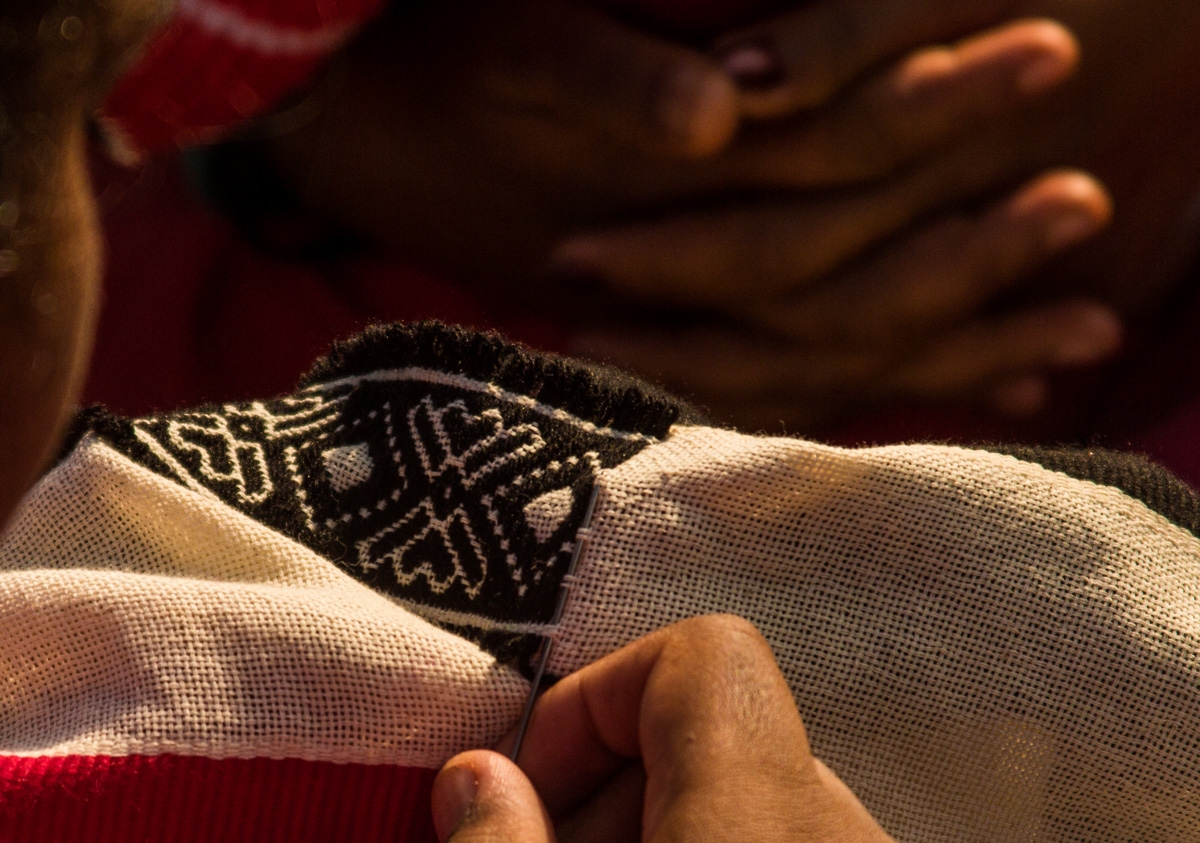
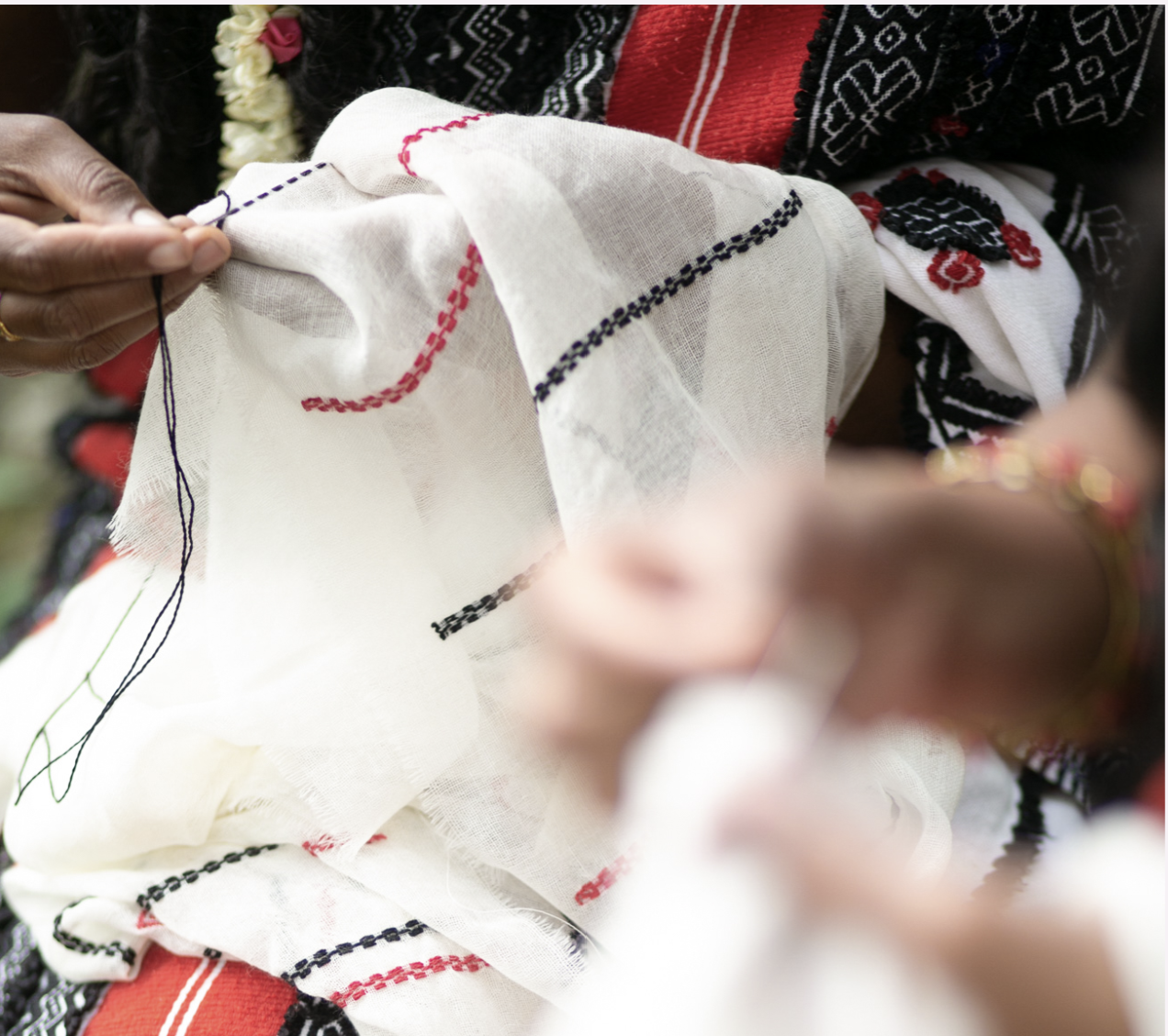
The dominant inspiration for the embroidery motifs or pukhoor is nature: flowers from the Sholas, butterflies, honeycombs, mountain peaks, etc.
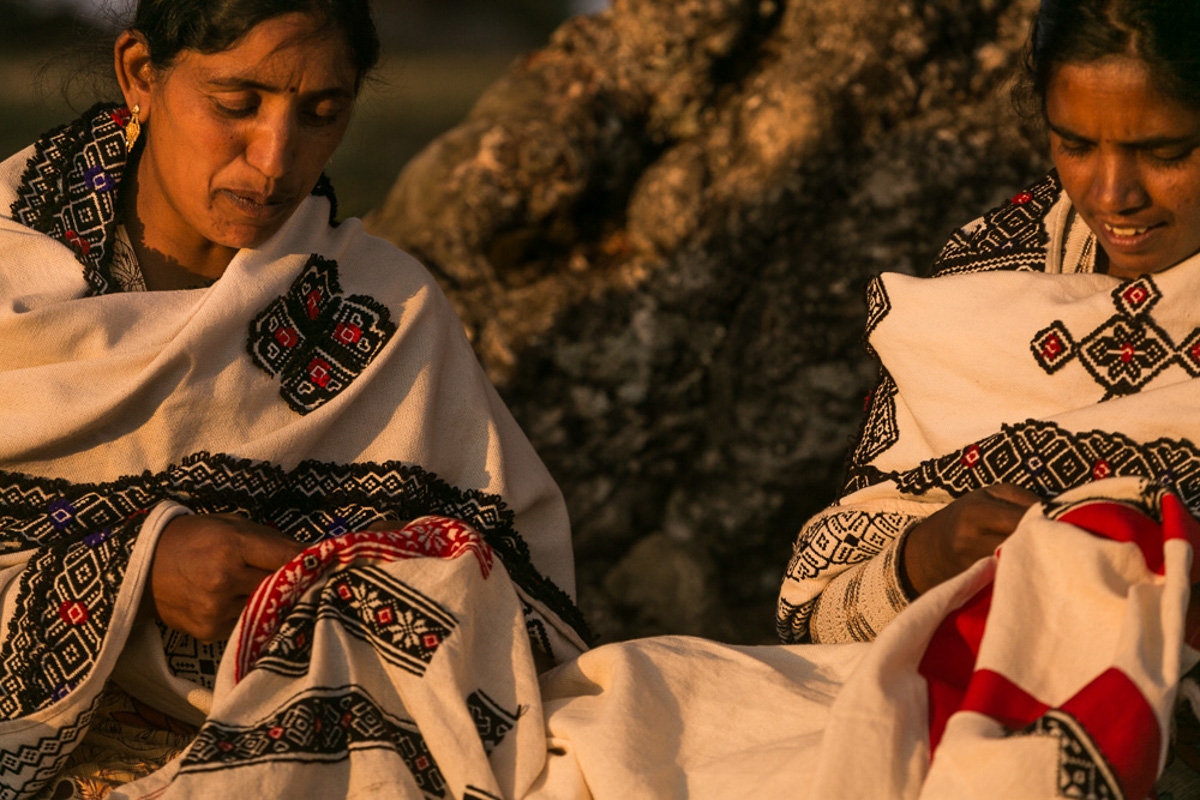
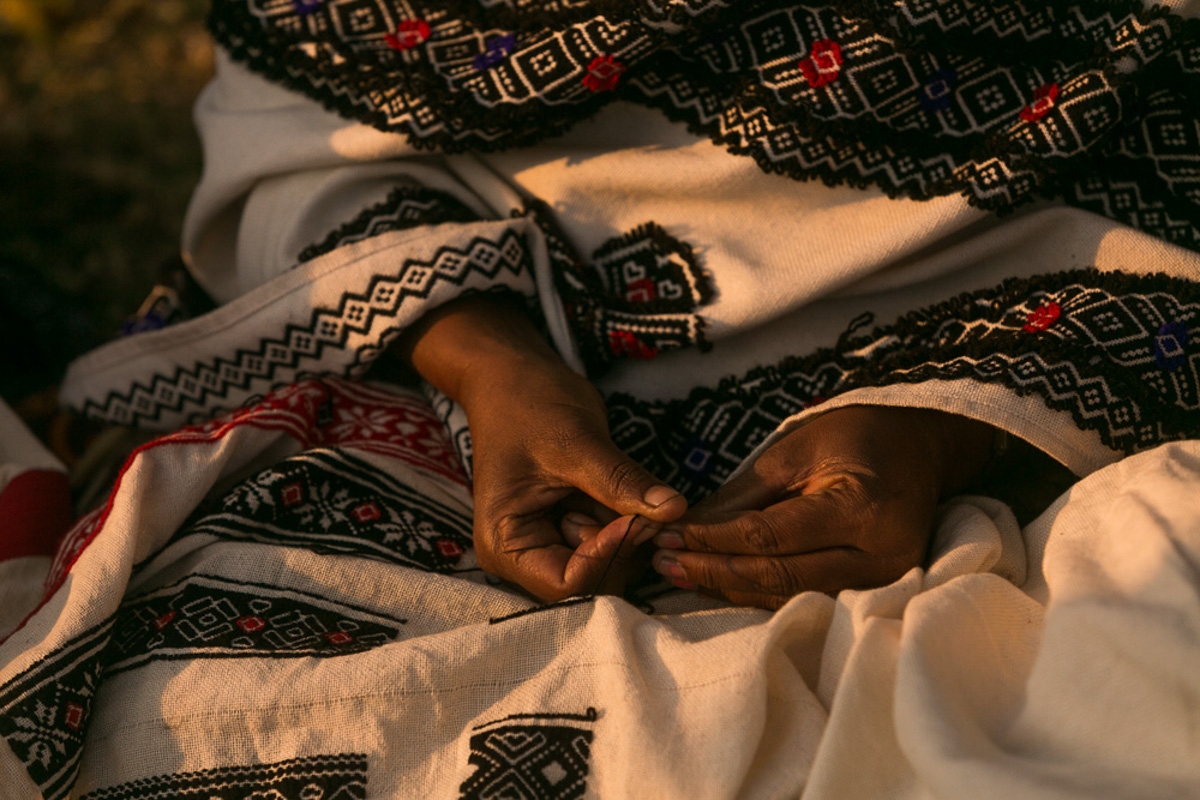
No embroidery frame is used, and the women count the thread with their fingers by merely stretching the base material. What is astonishing is that the women skillfully embroider patterns with such a geometric precision without any external aids like a scale or patterns or mathematical literacy. Among the many other beautiful aspects of this embroidery, one that really distinguishes it from other embroideries is that it is entirely reversible and one can use/display both sides. A true testament to the incredible dexterity, skill and creativity of the Toda artisans. Where feasible, to create a richer texture and enhance the dimensionality of the embroidery, during the stitching, a small amount of tuft is tastefully allowed to bulge. Traditionally, the preferred colour of the base fabric remains off-white. The primary colours of the threads are red, black and occasionally blue.
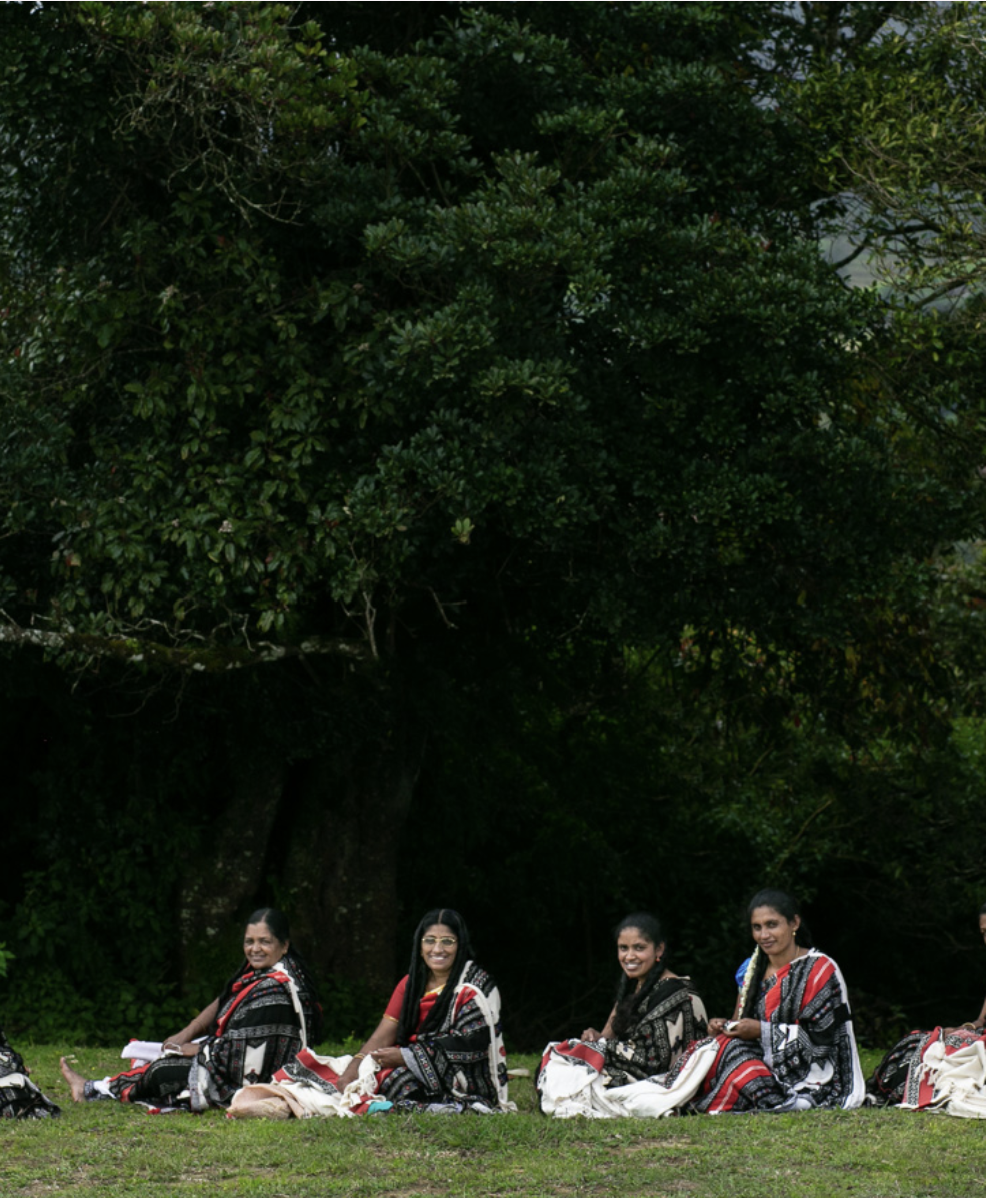
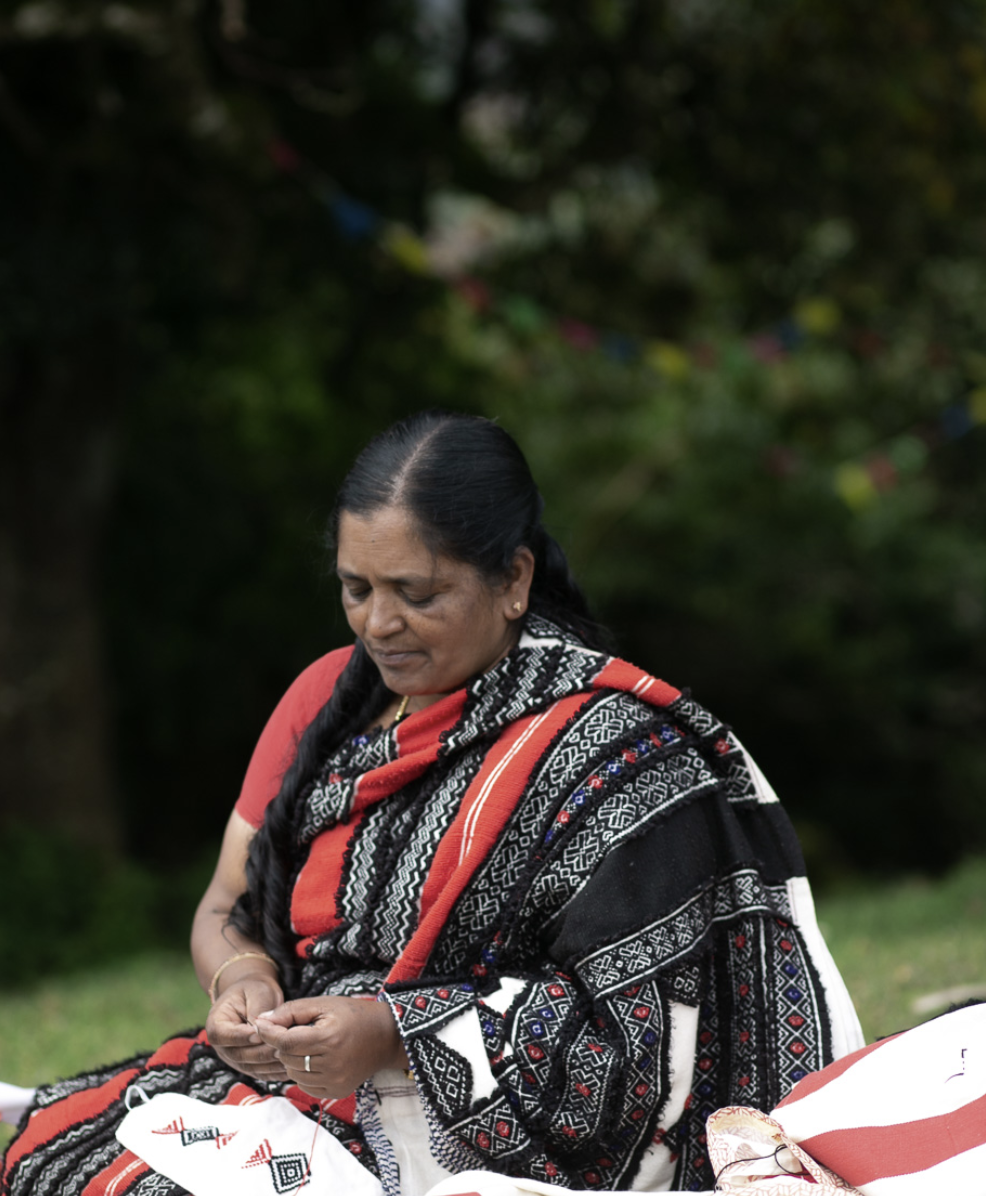
Young girls start learning to embroider at about puberty. On many occasions, I have seen them gather around and learn from the older women. It’s common to see groups of Toda ladies of different age groups happily seated upon a knoll in their hamlet, usually under the shade of a large tree, engaged in their art. It evokes a slowness of living and communal life, which the Todas still maintain despite the rush of the world around them. The women take pride in the painstaking perfection required for the embroidery, and thrive in the communal settings it created.
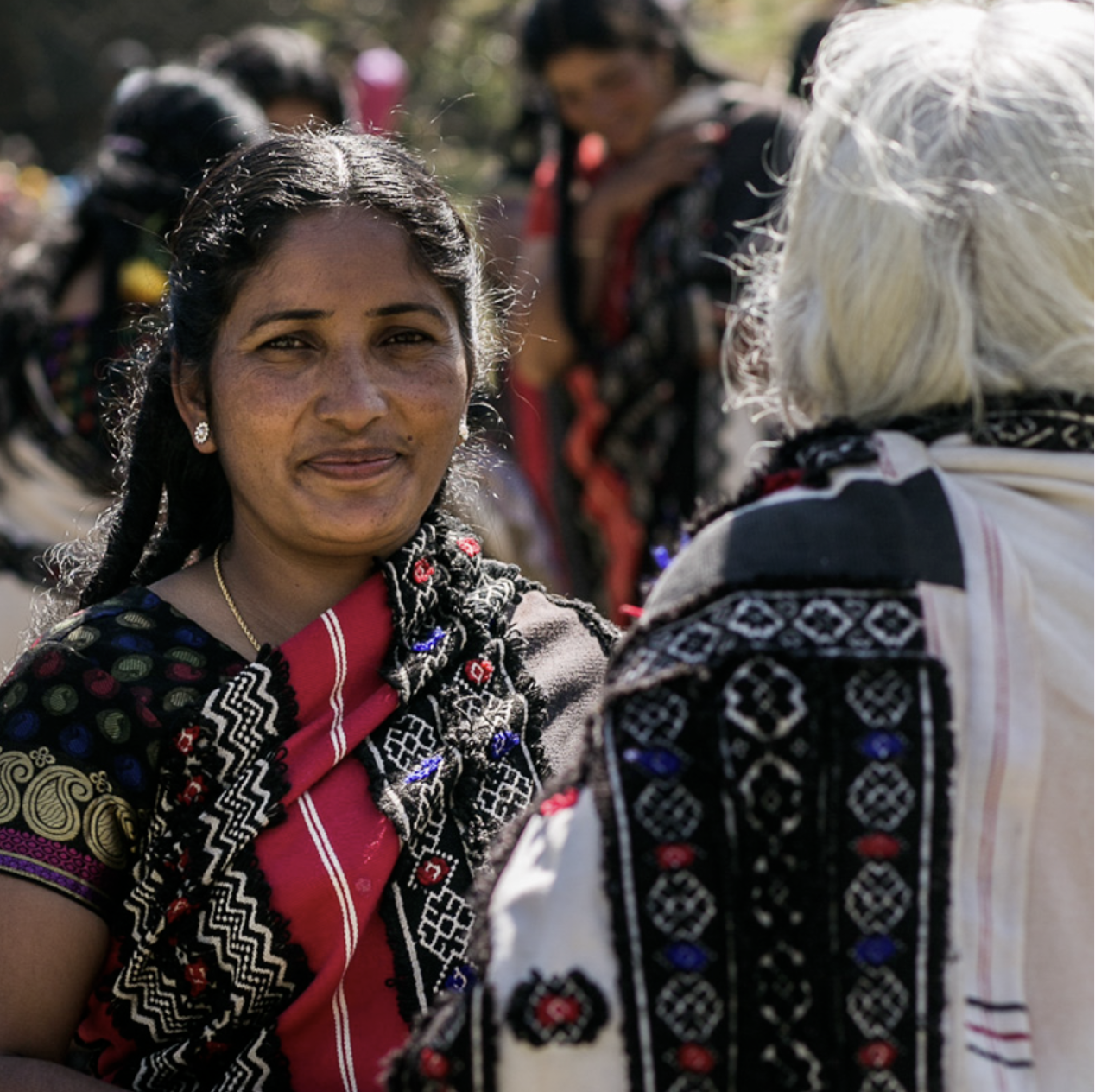
Puthkuzhy (pronounced pooth-kully) is the Toda garment which showcases the grandeur and intricacy of the signature Toda red and black embroidery. Traditionally, both men and women wore it over a cotton waist cloth known as Todorrp. It is draped around one’s back in a way that the embellished end is brought to the front over the right shoulder, then over the left shoulder once again.
While the Puthkuzhy is as old as the Todas themselves, the embroidery seems to have evolved over time, becoming busier, fuller, and encompassing greater stories and symbols. Colonial records and photographs show simple, minimal patterns compared to the rich, vibrant, and full tapestries that we see today.
Toda embroidery now finds itself on cushion covers to garments, making the product more broadly saleable. Today, tourism has fortuitously revived the craft, enabling Toda women to make a modest living with their talent. These innovations have been aided by the Toda Nazhvazhvu Sangam, a non-profit organisation run by Dr Tarun Chhabra, and Keystone Foundation, a Kotagiri-based non-profit which works on eco-development initiatives in the Nilgiris. In 2013, thanks to their support and community effort, the Government of India assigned Toda embroidery a Geographical Indicator (GI). Toda embroidery, therefore, can now be produced only by Toda women using their traditional methods. This has been an enormous leap forward for the community in safeguarding their artistic legacy.
Some excerpts for this essay have been taken from from Soul of the Nilgiris, Ramya Reddy, Published 2018


You may also like
Pause•Issue 9
Mountain Magic
BY Sangeetha Shinde Tee
Connect•Issue 8
The Keeper of Indigenous Memory: Remembering Janagiamma
BY Ramya Reddy

Imbibe•Issue 7
Roots and Resilience: A Conversation with Vanya Orr
BY Ramya Reddy
Imbibe•Issue 7
The Dawn of Bear Island
BY Gayatri Ganesh

Read•Issue 7
The Blue Remembered Hills
BY Meher Mirza

Imbibe•Issue 5
Turning Trash into Triumph: The Unyielding Spirit of Samantha Iyanna and Clean Coonoor
BY Ramya Reddy

In the Nilgiris•Issue 5
Resurrection of an Erstwhile Landscape
BY Ajay Ludra

In the Nilgiris•Issue 5
A Pause for the Perfect Cup of Tea
BY Sandeep Subramani